

Delivering What Matters
Delivering senior programme management and system engineering expertise to defence and critical‑infrastructure sectors — and now bringing the same trusted standards to high‑quality drone components for UK hobbyists and operators.
Real world programmes delivered
-
Project Lelantos
Objectives
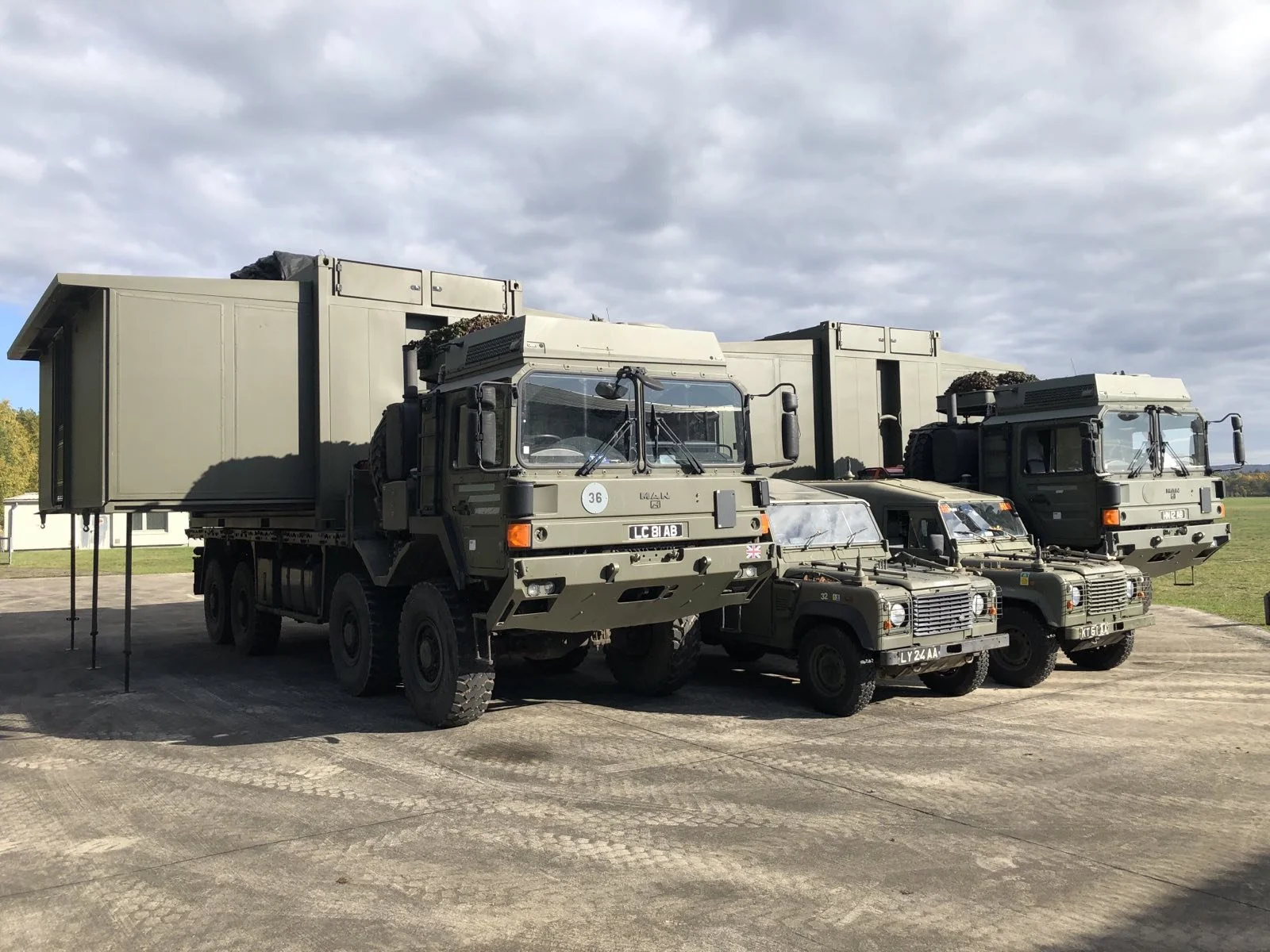
This was an experimentation project with aims to combine best of breed technologies into a cohesive next-generation, agile, more survivable, and secure Staff Working Environment (SWE) for UK Defence, supporting deployable headquarters across various operational conditions.
Design and Prototype a Scalable SWE: Develop an agile Command Post (CP) model using cutting-edge commercial technology to support mobility, survivability, and secure communications.
Enable Digital Transformation: Support the digitisation of UK Joint Forces through integrated shelters, power systems, and communications (CIS).
Use Agile Development Methods: Apply Lean-Agile, DevSecOps, and iterative testing to rapidly build, evaluate, and refine Minimum Viable Products (MVPs).
Enhance Operational Capability: Improve the ability of deployed HQs to communicate securely, build and move quickly, and remain undetected in high-threat environments.
Integrate Advanced Technology: Leverage wireless technologies (WiFi, 5G, LiFi), cloud-based command tools, and hybrid renewable energy systems.
Promote Sustainability and Efficiency: Reduce energy consumption and logistical burden while increasing resilience through modular and efficient designs.
Support Training and Adoption: Deliver tailored training to ensure user understanding and smooth integration of new technologies.
✅ Core Achievements
Mobile Command Unit (MCU) designed, build and Proven:
Successfully deployed on multiple exercises.
Achieved setup and takedown times of <30 minutes for Initial Operational Capability (IOC) and <1 hour for Full Operational Capability (FOC).
Provided integrated shelter, hybrid power, and wireless CIS.
Demonstrated ability to operate silently to reduce detectability (thermal/noise signature).
Enabled rapid, modular HQ deployments with improved survivability via dispersed C2 operations.
Wireless CIS (Command Information System) Success:
100-seat multi-domain wireless CIS solution validated.
Significant reductions in setup time, cabling, equipment needs, and bandwidth usage.
Demonstrated support for VDI-based services across MISSION SECRET and NATO SECRET domains.
Enabled users to access multiclassification services on a single secure terminal, reducing hardware requirements.
Troposcatter Communication Trials:
Validated Beyond Line of Sight (BLOS) communications without relying on satellite infrastructure.
Achieved throughputs of up to 210 Mbps at 45 km; ideal for tactical scenarios.
Demonstrated as a viable communications system as a part of a PACE (Primary, Alternate, Contingent, Emergency) plan
Agile Delivery Model:
The Agile approach enabled rapid adjustments to changing requirements without extra costs or delays.
Proved effective during hardware shortages and shifting project goals.
Adopted a fail fast experimentation mentality
🧠 Notable Innovations
Common Operating Picture (COP):
Enabled multi-domain, multi-classification information to be fused on a single device ("Single Pane of Glass").
Energy Efficiency Gains:
Integrated hybrid energy systems resulted in 80% fuel savings over legacy systems thus reducing the logistic burden and improving operational effectiveness.
Significant Support Personnel Reduction:
Reduced deployed signallers from 19 to 5 while maintaining operational effectiveness.
-
Project Quicksilver
Objective
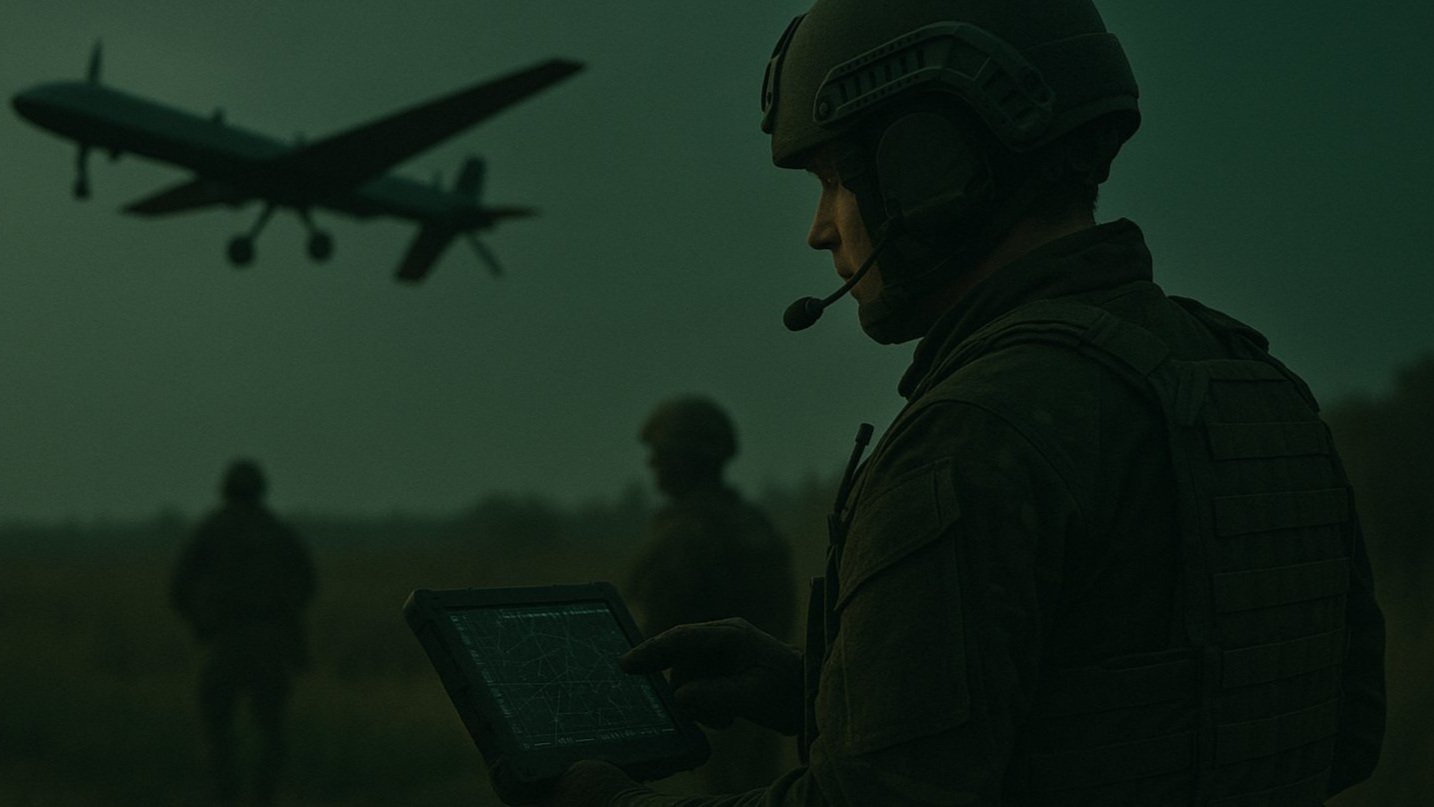
To support the small teams of Land Special Operations Brigade by developing suitable staff working environments coupled with appropriate communications information systems to operate globaly.
MARSS, as a key partner to CDW, is responsible for providing professional services support and specialist equipment to Project Quicksilver. MARSS is providing the expertise to support:
Comms architecture, design and delivery planning Including but not limited to:
Review and update communications requirements.
Development and delivery of a high level design.
Development and delivery of a low level design.
Development of delivery options utilising EP delivery where appropriate or MOTS / GOTS / COTS.
Integrate capabilities into any external systems.
Gather Interoperability requirements, development and delivery of capabilities.
Develop the URD.
Achieve Secure by Design compliance to Official Sensitive.
Staff Working Environments (deployable HQs) requirements capture and design of SWE including:
Shelter
Power and light.
Environmental controls e.g., heat and cooling.
Interior fit out.
Vehicle integration / docking.
C2 equipment e.g., electronic screens, bird-tables.
LAN and communications system.
Ongoing support, including but not limited to:
Horizon scanning of appropriate C2 capabilities with six (6) monthly updates.
Capability Assessments of emerging capabilities e.g., equipment and applications.
Requirements management including full analysis and description of new requirements.
Integration of new capabilities and data e.g., FMV feeds.
Development and implementation of project management framework including change management processes.
Security and Safety support ensuring project and deliverables are policy compliant including Security, JSP 604 and Information Assurance.