
PROJECT LELANTOS
Next-generation deployable command capability for UK defence.
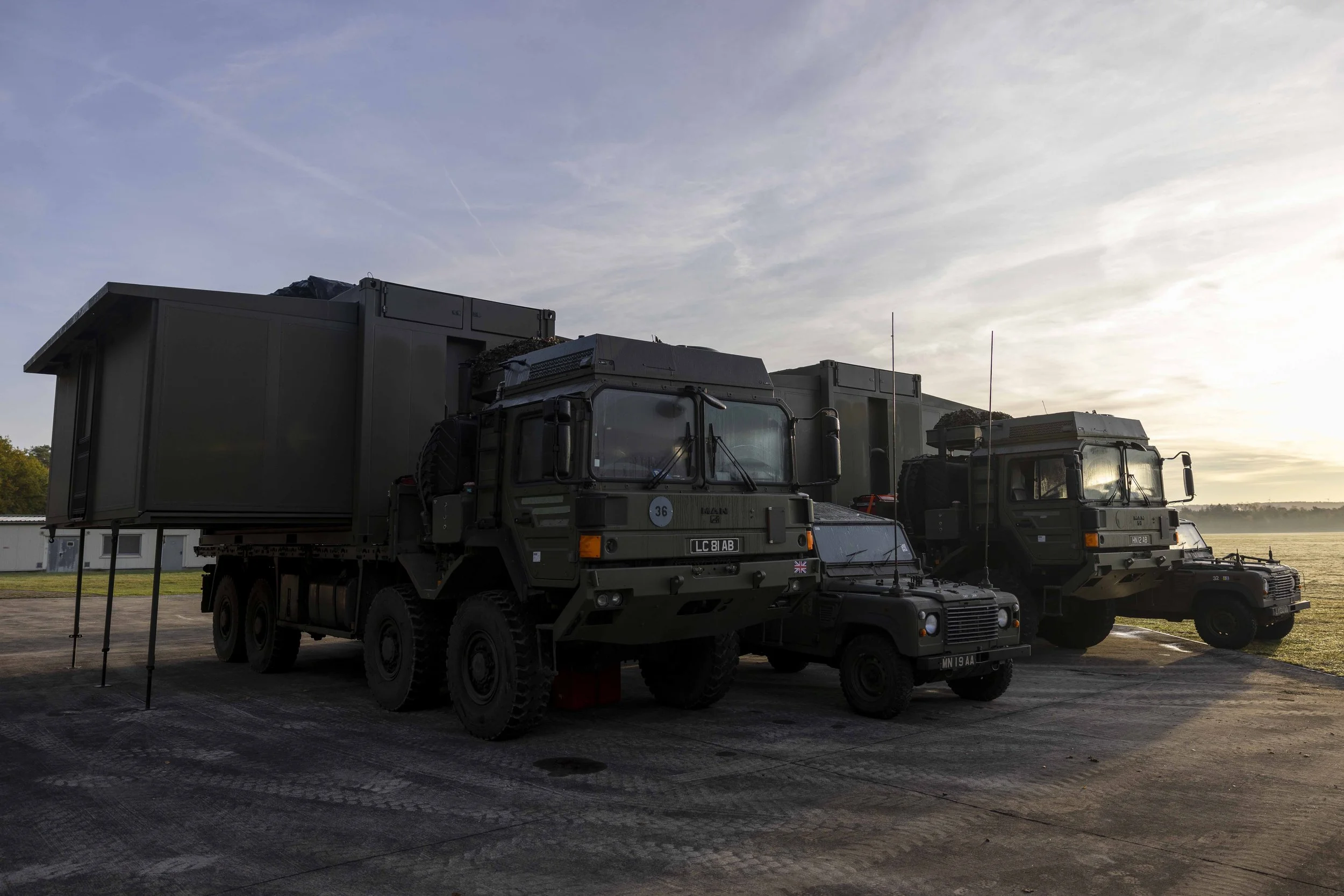
Project Lelantos was an experimentation programme established to combine best-of-breed technologies into a cohesive, next-generation Staff Working Environment for UK Defence, supporting more agile, survivable and secure deployed headquarters.
The programme brought together command-and-control, wireless communications, deployable infrastructure, power and emerging technologies into an integrated experimental capability designed to reduce deployment time, physical footprint and logistical burden.
DEFENCE | C4I | TACTICAL COMMUNICATIONS | SYSTEMS INTEGRATION | EXPERIMENTATION
THE REQUIREMENT
A more agile and survivable deployed headquarters
Traditional deployed headquarters require significant infrastructure, cabling, power generation, support personnel and time to establish.
The programme was established to identify, integrate and experimentally validate technologies capable of reducing that burden while improving mobility, resilience and survivability.
The programme explored technologies including wireless networking, 5G, LiFi, cloud-based command tools, deployable shelters and hybrid renewable power systems.
FASTER DEPLOYMENT | REDUCED FOOTPRINT | GREATER RESILIENCE | LOWER LOGISITCAL BURDEN
THE CHALLENGE
Complex technology. Multiple stakeholders. One programme
The challenge wasn’t simply finding interesting technology. it was controlling a programme containing numerous suppliers with their own agendas, engineers, experimental technology, operational users, changing priorities and an immovable exercise schedule.
Different technologies needed to operate together as a coherent capability while supporting demanding operational requirements including:
TECHNOLOGY SELECTION
Assess which technologies warranted further investment and those that did not.
MULTI-SUPPLIER DELIVERY
Coordinate engineers and technology providers across multiple workstreams.
MULTIPLE STAKEHOLDERS
Customer, users, engineers and technology providers.
OPERATIONAL REQUIREMENTS
Balance experimentation with the needs of the end users.
THE MARSS ROLE
Programme leadership and delivery governance
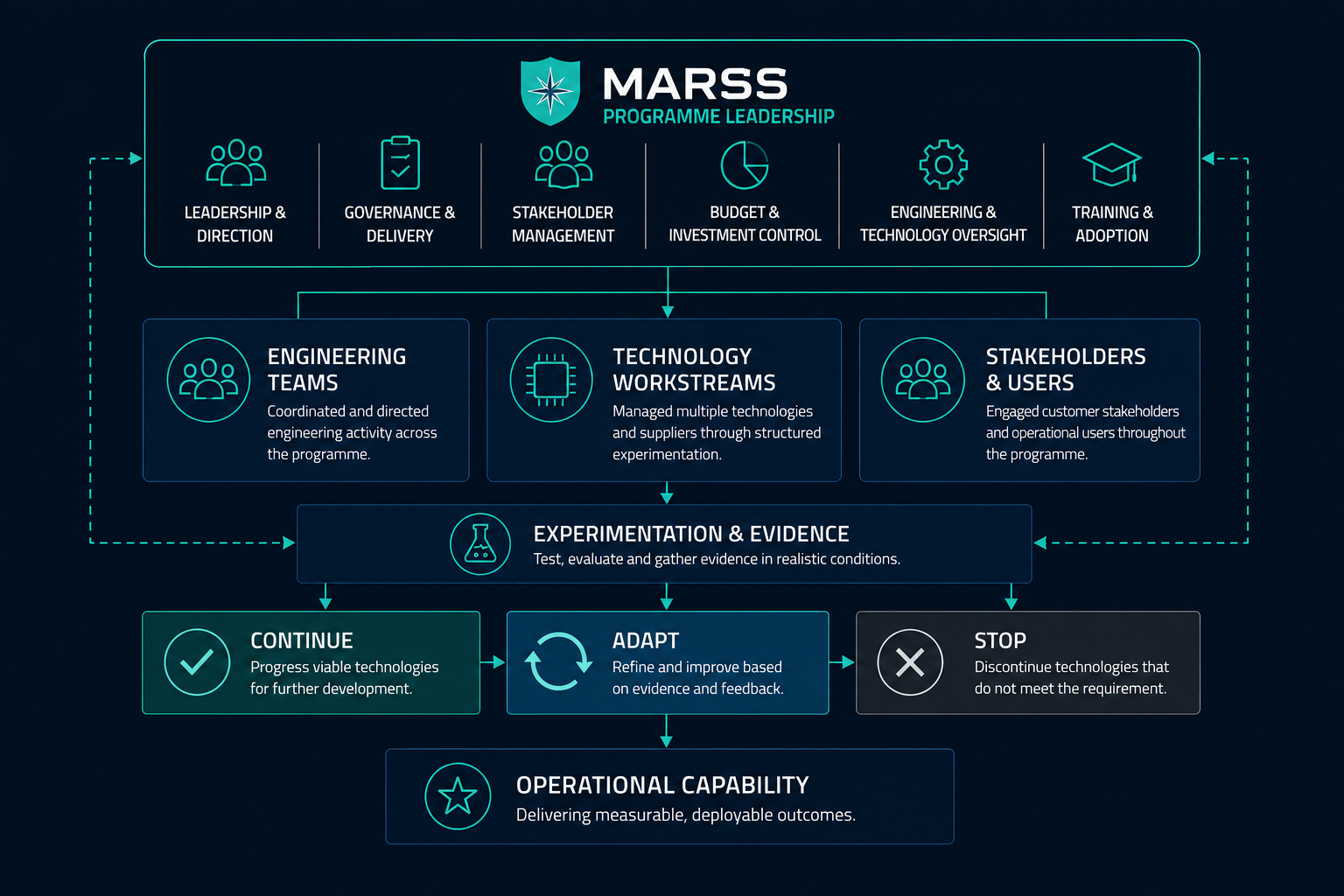
MARSS provided the programme leadership and governance for Project Lelantos, an integrated defence experimentation programme.
Our role carried responsibility for the overall management, governance and coordination of the programme; bringing together stakeholders, engineers, technology suppliers and operational users to ensure experimentation remained focused on delivering meaningful capability.
DELIVERY & OUTCOMES
From experimentation to measurable capability improvement
TAC - MOBILE COMMAND CENTER
<30 Minute Initial operating capability (IOC)
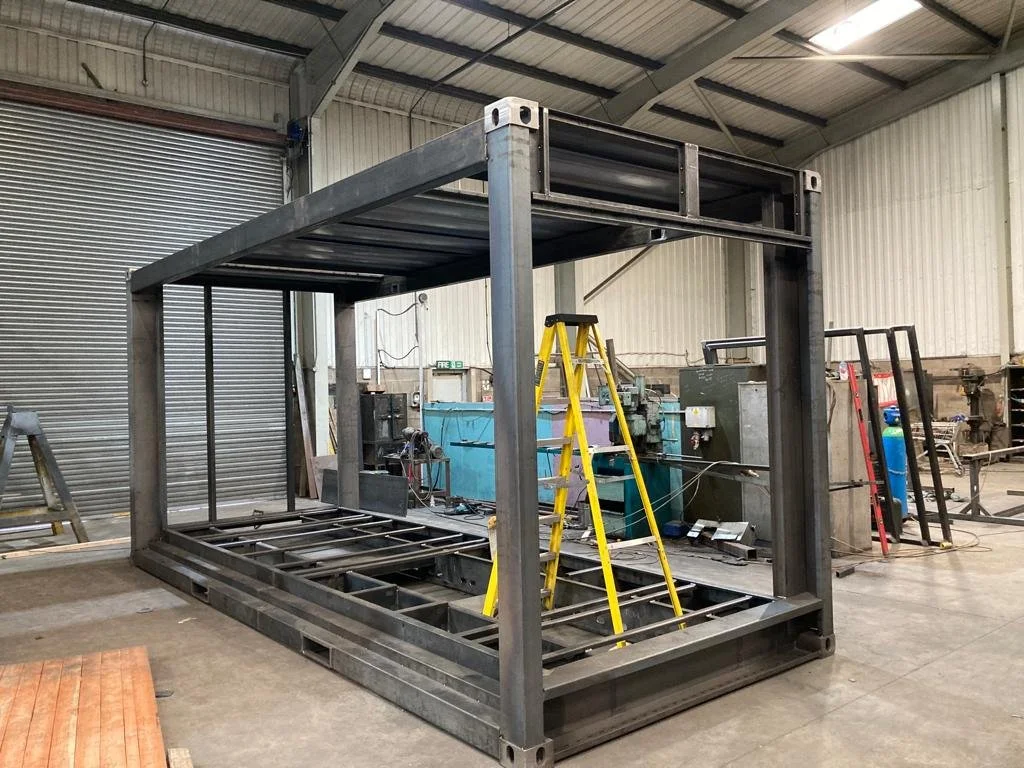
A tented TAC HQ took up to 18 hours to reach IOC. We reduced this to <30 minutes.
WIRELESS HQ
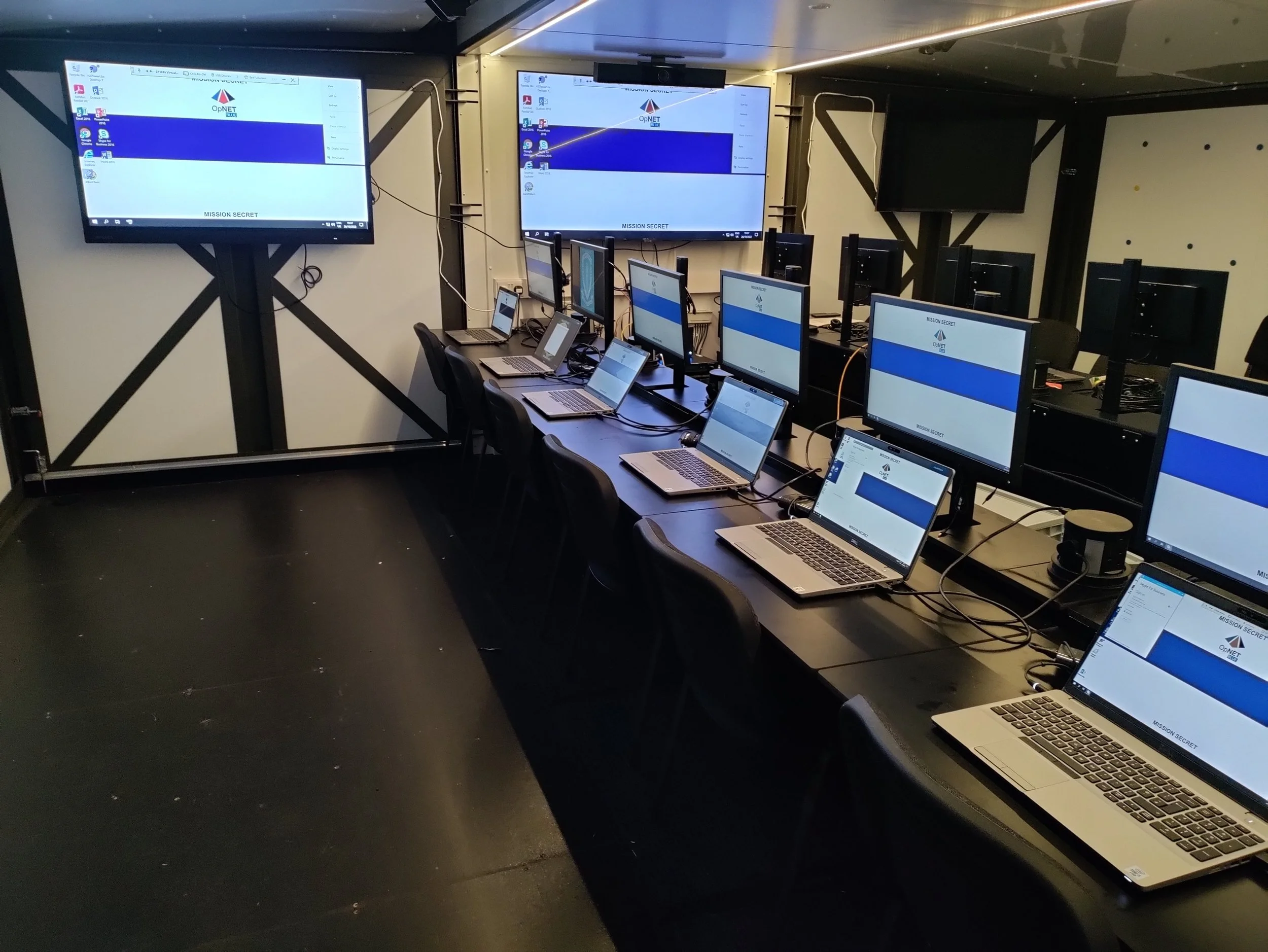
100 Seat secure wireless multi-domain HQ
Significant reduction in cabling, delivering savings of approximately £100,000 per deployment, while reducing power consumption and increasing flexibility through the use of a single UAD for multi-domain access.
REDUCED LOGISTICS BURDEN
80% fuel saving through integrated hybrid energy system
Huge reduction in fuel consumption significantly reducing the logistics burden whilst also permitting silent running for up to 8 hours for increased survivability.
GREATER SURVIVABILITY | IMPROVED MOBILITY | ENHANCED RESILIENCE | GREATER OPERATIONAL FLEXIBILITY
HAVE A SIMILAR REQUIREMENT?
Let’s turn it into operational capability.
MARSS provides the programme leadership, technical expertise and delivery support required to move complex defence and technology programmes from requirement through to measurable operational outcomes.